The origins of whisky can be traced back to ancient civilizations, with the earliest records suggesting that distillation techniques were developed in Mesopotamia around 2000 BCE. However, the spirit that we recognize today as whisky began to take shape in the early medieval period, particularly in Ireland and Scotland. The word “whisky” itself is derived from the Gaelic term “uisge beatha,” which translates to “water of life.” This phrase reflects the reverence with which early distillers regarded their craft.
By the 15th century, whisky production was well established in both regions, with the first written record of whisky in Ireland appearing in 1405, when a tax was levied on a local distillery. As whisky production evolved, so too did the methods and ingredients used. The introduction of pot stills in the 16th century allowed for more efficient distillation, leading to a higher quality spirit.
By the 18th century, whisky had gained immense popularity, particularly in Scotland, where it became a significant part of the economy. The establishment of legal distilleries and the implementation of regulations helped to standardize production methods, ensuring that whisky could be produced consistently and safely. The Industrial Revolution further transformed whisky making, introducing innovations such as column stills and mechanized processes that increased production capacity and efficiency.
Key Takeaways
- Whisky making has a rich history rooted in traditional methods and regional practices.
- Key ingredients include barley, water, and yeast, each crucial to flavor development.
- Distillation methods, such as pot stills and column stills, significantly impact whisky character.
- Aging in oak barrels and climate conditions play vital roles in whisky maturation and taste.
- Tasting whisky involves appreciating its complex flavors shaped by blending and fermentation.
The Ingredients: Barley, Water, and Yeast
The primary ingredients in whisky production are barley, water, and yeast, each playing a crucial role in the final product’s flavor and character. Barley is the most commonly used grain in whisky making, particularly in Scotch whisky. It is chosen for its high starch content, which is essential for fermentation.
The variety of barley used can significantly influence the flavor profile of the whisky; for instance, different strains may impart distinct notes ranging from nutty to fruity. In addition to barley, other grains such as corn and rye are used in various types of whisky, particularly in American bourbon and rye whiskey. Water is another vital component in whisky production, not only for mashing and dilution but also for its mineral content, which can affect the taste of the final product.
Many distilleries source their water from natural springs or rivers, often claiming that the purity and mineral composition of their water contribute to their whisky’s unique character. For example, the soft water from the Scottish Highlands is renowned for producing smooth and delicate whiskies. The importance of water extends beyond its role in production; it is also integral to the whisky’s identity, with many distilleries proudly highlighting their water source as part of their heritage.
Yeast is the final ingredient that completes the trifecta of whisky production. This microorganism is responsible for fermentation, converting sugars from the malted barley into alcohol. Different strains of yeast can impart various flavors and aromas to the whisky, making it a critical factor in determining the spirit’s overall character.
Distillers often experiment with different yeast strains to achieve specific flavor profiles, leading to a diverse range of whiskies on the market. The fermentation process itself can take several days, during which yeast consumes sugars and produces alcohol along with byproducts such as esters and phenols that contribute to the whisky’s complexity.
The Malting Process
Malting is a crucial step in whisky production that transforms raw barley into malted barley, which is essential for fermentation. The process begins with soaking barley grains in water to initiate germination. This soaking period typically lasts for two to three days, during which the grains absorb moisture and begin to sprout.
Once germination has begun, the grains are spread out on a malting floor or placed in a controlled environment where temperature and humidity can be monitored. This stage is vital as it activates enzymes within the barley that convert starches into fermentable sugars. After several days of germination, the malted barley is dried using hot air or peat smoke.
The drying process halts germination and preserves the enzymes necessary for fermentation. The choice of drying method can significantly impact the flavor profile of the whisky; for instance, using peat smoke during drying imparts a distinctive smoky flavor that is characteristic of many Islay whiskies. Once dried, the malted barley is ground into a coarse powder known as grist, ready for the next stage of production.
Mashing and Fermentation
Mashing is the process that follows malting and involves mixing the grist with hot water to extract fermentable sugars. This mixture is known as mash and is typically heated in large vessels called mash tuns. During this stage, enzymes activated during malting break down starches into sugars, creating a sweet liquid known as wort.
The temperature and duration of mashing can vary depending on the desired characteristics of the final product; higher temperatures may yield more sugars but can also lead to a heavier mouthfeel. Once mashing is complete, the wort is separated from the solid grain husks through a process called lautering. The liquid wort is then transferred to fermentation vessels where yeast is added.
Fermentation typically lasts between three to five days, during which yeast consumes the sugars present in the wort and converts them into alcohol and carbon dioxide. This process not only produces alcohol but also generates various flavor compounds that contribute to the complexity of the whisky. The result is a low-alcohol liquid known as “wash,” which usually contains around 6-8% alcohol by volume (ABV).
Distillation is a critical step in whisky production that concentrates alcohol and refines flavors by separating volatile compounds from non-volatile ones. There are two primary types of stills used in whisky distillation: pot stills and column stills. Pot stills are traditional copper vessels that have been used for centuries in whisky making.
They operate on a batch basis, meaning each still can only process one batch at a time. The wash is heated in the pot still, causing alcohol to vaporize and rise through the neck of the still before condensing back into liquid form. Pot stills are known for producing rich and complex spirits due to their ability to retain more flavor compounds during distillation.
Many Scotch whiskies are distilled using pot stills, resulting in a wide range of flavor profiles that reflect their unique ingredients and production methods. In contrast, column stills—also known as continuous stills—allow for continuous distillation and are often used in larger-scale operations. These stills consist of multiple columns stacked vertically, where wash flows down while steam rises through perforated plates.
This method enables higher alcohol concentrations and greater efficiency but may result in a lighter spirit with fewer complex flavors.
The Aging Process: Oak Barrels and Maturation
| Stage | Description | Duration | Key Metrics |
|---|---|---|---|
| Malting | Barley grains are soaked in water and allowed to germinate, converting starches into fermentable sugars. | 4-6 days | Moisture content: 45-50%, Germination temperature: 15-20°C |
| Mashing | Germinated barley (green malt) is ground and mixed with hot water to extract sugars. | 4-6 hours | Water temperature: 65-70°C, Sugar extraction efficiency: 75-85% |
| Fermentation | Yeast is added to the wort to ferment sugars into alcohol and produce flavor compounds. | 48-96 hours | Alcohol content: 6-8% ABV, pH: 4.0-4.5, Temperature: 18-25°C |
| Distillation | Fermented wash is distilled to concentrate alcohol and refine flavors. | Varies (usually 2-3 runs) | Alcohol strength after distillation: 60-70% ABV, Number of distillations: 2 or 3 |
| Maturation | Distilled spirit is aged in oak casks to develop flavor and color. | 3-12+ years | Barrel type: American oak, European oak; Maturation time: minimum 3 years |
| Bottling | Whisky is filtered, diluted to bottling strength, and packaged. | Varies | Bottling strength: 40-46% ABV, Filtration: chill-filtered or non-chill-filtered |
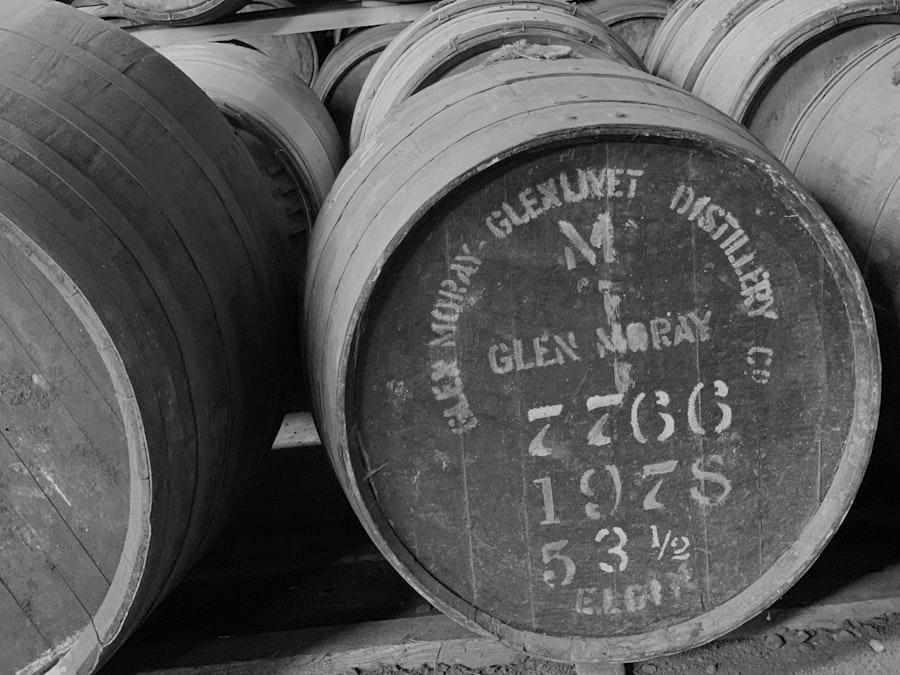
Aging is one of the most critical aspects of whisky production that significantly influences its flavor and character. Once distilled, whisky is transferred into oak barrels for maturation. The choice of barrel type—such as American oak or European oak—can impart distinct flavors ranging from vanilla and caramel to spice and fruitiness.
Additionally, barrels may be charred or toasted before filling, further enhancing their flavor contributions during aging. During maturation, chemical reactions occur between the whisky and the wood, allowing compounds from the barrel to infuse into the spirit while also facilitating oxidation processes that mellow harsh flavors. The aging process can last anywhere from three years to several decades, with many distilleries offering age-stated whiskies that indicate how long they have been matured.
Environmental factors such as temperature fluctuations and humidity levels play a significant role in how whisky interacts with its barrel over time; warmer climates may accelerate aging while cooler climates may slow it down.
Blending and Bottling
Once maturation is complete, many whiskies undergo blending before bottling. Blending involves combining different casks or batches of whisky to achieve a consistent flavor profile or create a unique expression. Master blenders possess an exceptional palate and deep knowledge of various whiskies, allowing them to craft harmonious blends that appeal to consumers’ tastes.
Some iconic blended whiskies have become household names due to their balanced flavors and accessibility. In contrast to blended whiskies, single malt whiskies are produced from malted barley at a single distillery without blending with other spirits. These whiskies often showcase distinctive regional characteristics influenced by local ingredients and production methods.
After blending or bottling decisions are made, whiskies are typically diluted with water to achieve desired alcohol levels before being bottled for sale.
The Importance of Water in Whisky Making
Water plays an indispensable role throughout every stage of whisky production—from mashing to dilution before bottling—making it one of the most critical ingredients in crafting quality spirits. The source of water can significantly influence both flavor profiles and overall quality; many distilleries pride themselves on using pure spring water sourced from nearby mountains or rivers known for their mineral content. In addition to its role in mashing where it helps extract sugars from grains, water also serves as a diluent before bottling—reducing alcohol content while preserving flavor integrity.
Distillers often conduct extensive testing on their water sources to ensure they meet specific criteria regarding purity and mineral composition; even slight variations can lead to noticeable differences in taste.
The Role of Yeast in Whisky Fermentation
Yeast is often overlooked yet plays an essential role in transforming sugary wort into alcoholic wash during fermentation—a process that significantly impacts flavor development within whisky production. Different strains of yeast can produce varying levels of esters (fruity aromas) or phenols (smoky notes), contributing unique characteristics to each batch. The fermentation process itself typically lasts several days; during this time yeast consumes sugars while producing alcohol along with various byproducts such as carbon dioxide and heat—creating an environment conducive for further chemical reactions that enhance complexity within finished spirits.
The Influence of Climate on Whisky Maturation
Climate has a profound impact on how whisky matures within its barrel over time—affecting everything from evaporation rates (often referred to as “the angel’s share”) to flavor extraction from wood staves. In warmer climates like Kentucky or Tennessee where bourbon is produced, higher temperatures lead to faster aging processes compared with cooler regions like Scotland where maturation occurs more slowly. Humidity levels also play an important role; higher humidity can result in greater evaporation of water compared with alcohol—leading to higher proof spirits over time while lower humidity may yield lower proof whiskies due to more significant alcohol loss relative to water loss.
The Art of Tasting and Appreciating Whisky
Tasting whisky is an art form that requires practice and an open mind; enthusiasts often engage all five senses when evaluating different expressions—from observing color clarity through swirling liquid within glassware—to inhaling aromas before taking sips while noting mouthfeel textures upon tasting. When tasting whisky, it’s essential to consider factors such as aroma intensity (nose), palate complexity (taste), finish length (aftertaste), along with overall balance between sweetness versus bitterness—allowing tasters not only appreciate individual characteristics but also understand how they contribute towards creating harmonious blends or unique single malts. Engaging with others who share similar interests can enhance appreciation further; participating in tastings led by knowledgeable guides provides opportunities for learning about various styles while exploring diverse flavor profiles across regions—ultimately deepening one’s understanding about this timeless spirit enjoyed worldwide today!
The whisky production process is a fascinating journey that transforms simple ingredients into a complex and flavorful spirit. From the malting of barley to the distillation and aging in oak barrels, each step plays a crucial role in developing the final product. For those interested in exploring the nuances of single malt whisky, a great resource is the article on Single Malt Whisky, which delves into its unique characteristics and production methods.
FAQs
What are the main ingredients used in whisky production?
The primary ingredients in whisky production are water, malted barley (or other grains such as corn, rye, or wheat), and yeast.
What is malting in the whisky production process?
Malting is the process where barley grains are soaked in water, allowed to germinate, and then dried in a kiln. This develops the enzymes needed to convert starches into fermentable sugars.
How is mashing done in whisky production?
Mashing involves mixing the malted barley with hot water to extract sugars. The mixture is stirred and heated to convert starches into fermentable sugars, producing a sugary liquid called wort.
What role does fermentation play in whisky making?
During fermentation, yeast is added to the wort to convert sugars into alcohol and carbon dioxide, creating a low-alcohol liquid called “wash.”
What is distillation in whisky production?
Distillation is the process of heating the wash to separate alcohol from water and impurities. This is typically done twice in pot stills or continuously in column stills to increase alcohol concentration.
Why is whisky aged in barrels?
Whisky is aged in wooden barrels, usually oak, to develop flavor, color, and aroma. The aging process allows the whisky to interact with the wood, mellowing harsh flavors and adding complexity.
How long is whisky typically aged?
Whisky aging varies by type and regulation but generally ranges from 3 to 12 years or more. Longer aging often results in smoother and more complex whisky.
What is the difference between single malt and blended whisky?
Single malt whisky is made from malted barley at a single distillery, while blended whisky is a mix of different malt and grain whiskies from multiple distilleries.
What factors influence the flavor of whisky?
Flavor is influenced by ingredients, water source, fermentation time, distillation method, type of barrels used, aging duration, and environmental conditions during maturation.
Is whisky production regulated?
Yes, whisky production is regulated by laws that define production methods, aging requirements, and labeling standards to ensure quality and authenticity.